Enhanced Due Diligence Software for High-Risk Client Management
Enhanced due diligence (EDD) is a set of additional checks required when a client presents a higher level of risk than standard customer due diligence can adequately address. Under the Money Laundering Regulations 2017 and FATF guidance, firms are expected to take a risk-based approach to customer due diligence, applying greater scrutiny where the risk of money laundering, terrorist financing, sanctions exposure or reputational harm is elevated.
EDD is typically required when a client is a politically exposed person, has links to a high-risk jurisdiction, is connected to adverse media, or has a complex ownership structure such as a trust, fund, family office or corporate vehicle. It may also be required where source of wealth or source of funds is unclear. In each case, compliance teams need to understand the risk, apply the right checks, document the rationale and monitor the relationship over time.
When a client is flagged as high risk, KYC360 brings together source of wealth checks, adverse media screening, UBO identification and enhanced ongoing monitoring in one auditable platform.
What EDD Checks Does KYC360 Enable?
Enhanced due diligence is delivered across the platform when a client’s risk profile requires additional scrutiny. For compliance officers and MLROs, this means EDD can be managed as part of the same operational workflow used for onboarding, AML screening and customer lifecycle management.
Onboarding
At onboarding, KYC360 helps firms apply deeper due diligence before a relationship is approved. Through KYC onboarding software, teams can collect and assess source of wealth and source of funds information, identify ultimate beneficial owners, and visualise complex client structures involving trusts, funds and corporates. KYB verification sources are integrated directly. This is particularly important in wealth management and private banking, where high-value relationships often involve multiple entities, intermediaries and ownership layers.
Screening
During screening, KYC360 enables firms to apply more rigorous controls to clients that present higher risk. The AML screening platform supports enhanced adverse media monitoring using live unstructured data sources, including Google and Bing, alongside PEP and sanctions screening. Configurable, risk-based search parameters help teams apply appropriate levels of scrutiny without overwhelming analysts with unnecessary alerts. Metadata improvement techniques enable up to a two-thirds reduction in false positives in AML screening, helping compliance teams reduce operational noise and focus on the risks that matter.
Ongoing Monitoring
EDD does not stop once a client is onboarded. Through ongoing monitoring, KYC360 supports more frequent review cycles for high-risk clients, trigger-based monitoring alerts and a full audit trail of EDD activity from initial trigger to resolution. If a client’s circumstances change, new adverse media appears, or an ownership structure is updated, the platform helps teams reassess the risk and evidence the action taken.
How KYC360 Flags and Manages High-Risk Clients
When a client is identified as requiring enhanced due diligence, KYC360 allows compliance teams to flag that client within the platform and apply a workflow that reflects the reason for the risk. A politically exposed person, for example, may require deeper screening and senior management approval. A complex trust structure may require further UBO verification and source of wealth evidence. A client with adverse media may require additional review, escalation and documented rationale before the relationship can proceed.
KYC360 is configurable so firms can apply the right checks for the right risk profile. Flexible risk scoring adapts to the firm’s own risk appetite and can be applied at both the individual client level and the structural level. This matters because risk is not always limited to a single person or entity. In complex client relationships, risk may sit within ownership layers, connected parties, jurisdictions or transactional context.
Advanced permissions also allow teams to collaborate securely across departments, offices and jurisdictions. For firms operating internationally, this helps ensure that local compliance requirements are respected while maintaining a consistent group-wide approach to EDD. The result is a more consistent, evidenced and auditable process, reducing reliance on spreadsheets, email chains and disconnected systems.
EDD for Complex Client Structures
Enhanced due diligence is especially important for wealth managers, private banks and professional services firms dealing with trusts, family offices, funds and corporate structures. They often require further checks to verify who ultimately owns, controls or benefits from the relationship.
KYC360 supports visualisation and validation of complex ownership structures, helping teams identify UBOs and understand how different parties connect. Integrated KYB verification sources support UBO identification and reduce the manual effort required to validate entity data. For compliance teams, this creates a clearer view of the client relationship and a stronger evidence base for risk decisions.
KYC360 can reduce time to revenue for complex client onboarding by up to 80 percent, helping firms onboard high-value clients faster without compromising due diligence standards. KYC360 has also been recognised as a Chartis Category Leader for CLM in Wealth Management 2026, reflecting the platform’s strength in managing complex client lifecycle requirements across regulated financial services.
For firms managing high-net-worth individuals, offshore structures or multi-entity relationships, this combination of speed, visibility and control is central to effective EDD. It allows compliance teams to support growth while maintaining the level of scrutiny regulators expect.
Meeting Regulatory Requirements for Enhanced Due Diligence
Enhanced due diligence requirements are rooted in the principle that higher-risk clients need greater scrutiny. The Money Laundering Regulations 2017 and FATF Recommendation 10 all reinforce the need for firms to apply a risk-based approach, understand the nature of the client relationship and keep appropriate records of due diligence decisions.
For regulated firms, it is not enough to say that EDD was performed. Compliance teams must be able to evidence why a client was treated as high risk, which checks were completed, what information was reviewed, who approved the decision and how the relationship will be monitored over time.
KYC360 provides the audit trail, document storage, risk scoring rationale and monitoring history needed to demonstrate that enhanced due diligence has been applied proportionately. The AML compliance platform helps firms move from fragmented evidence gathering to a controlled, repeatable and regulator-ready process.
Request a demo today to see how KYC360 enables organisations to comply and outperform.
The KYC360 platform is an end-to-end solution offering slicker business processes with a streamlined, automated approach to Know Your Customer (KYC) compliance. This enables our customers to outperform commercially through operational efficiency gains whilst delivering improved customer experience and KYC data quality.
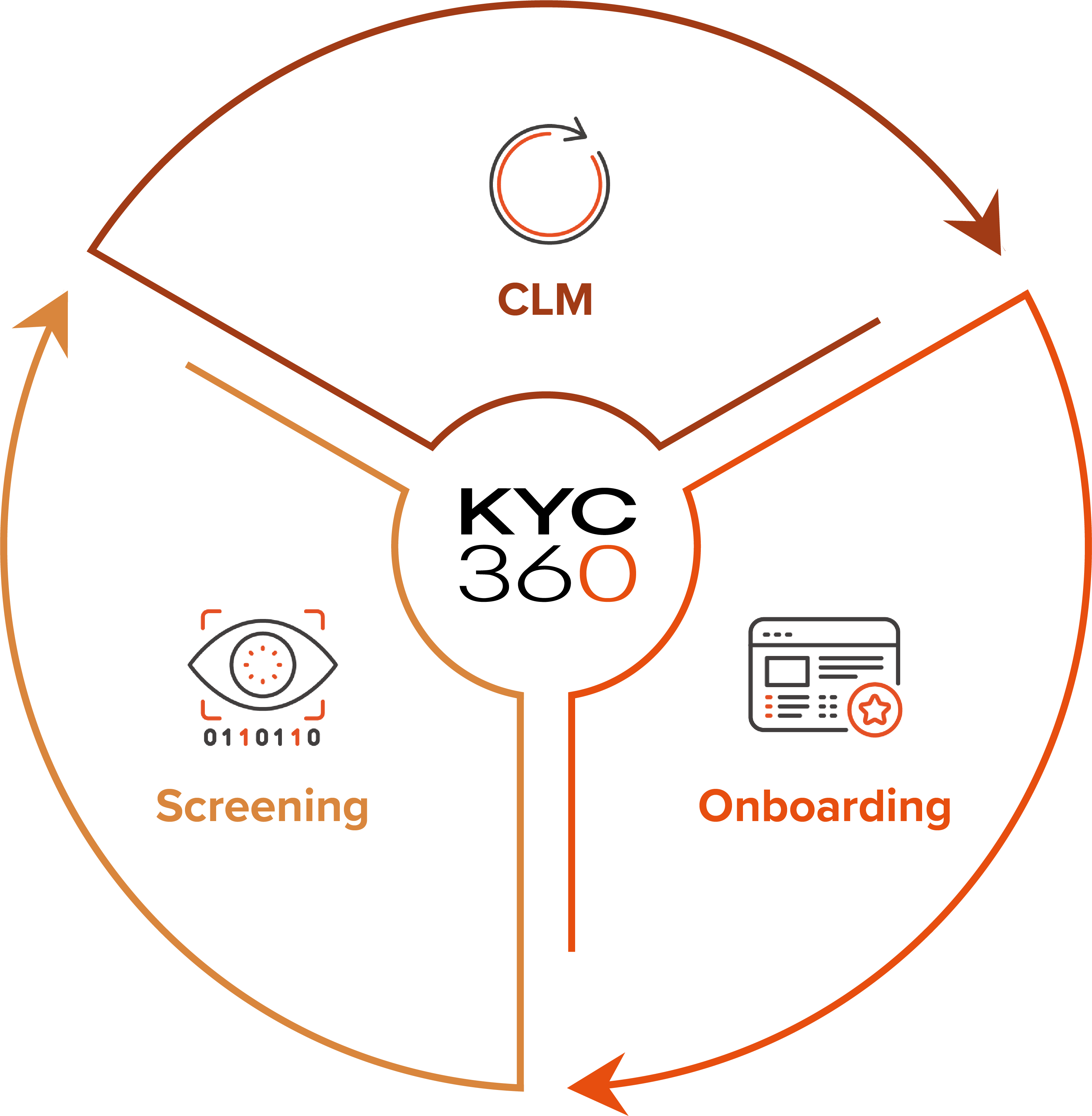
Consolidate your system stack and data vendor relationships with one platform to cover all Onboarding, Screening, Perpetual KYC (pKYC) and CLM tasks, with market-leading data sources pre-integrated under a single license agreement. Live risk scoring and automated data collection enables a shift from periodic to event-driven review, while providing a single actionable picture of real-time risk with all documents and data in one place.