KYC Remediation for Legacy Customer Files
Financial institutions are sitting on a growing compliance problem. Across the sector, customer files can be inaccurate, outdated, and therefore generate risk. In some cases, they may be missing essential information that regulators now consider non-negotiable.
Regulatory pressure is intensifying. The FATF Recommendations on Customer Due Diligence set out a comprehensive and consistent framework of measures for firms to follow. Those standards have evolved since many legacy files were first created, and institutions with large customer books built under older frameworks, through mergers and acquisitions, or across correspondent banking relationships spanning multiple jurisdictions can face the prospect of large-scale KYC remediation projects. The FCA's AML and KYC requirements place clear obligations on firms to maintain accurate, current customer records.
This article outlines the most common pitfalls with remediating legacy customer data and the practical steps compliance teams can take to manage KYC remediation programmes more effectively.
Why Outdated Customer Data Creates Remediation Headaches
Legacy customer records can pose compliance challenges, as regulatory expectations are fast-evolving and risk moves quickly. Files built under older onboarding frameworks may lack . Ultimate Beneficial Ownership information, documented source of wealth, current PEP screening results, and consistent risk classifications. These gaps may have been sufficient at the time but may no longer align with the standard required.
The problem becomes acute when institutions try to launch remediation campaigns to fix these data issues. Records are often spread across disconnected systems with no single source of truth. Audit trails are incomplete or inaccessible. Risk ratings assigned years ago may not align with current regulatory criteria. Customer risk profiles can change faster than periodic review cycles can keep up.
Regulators increasingly want proof of controls in action rather than policy documents. Major enforcement actions in recent years have been linked to poor record keeping and a poor understanding of customer risk. Institutions that cannot demonstrate they know their customers' current risk profiles are exposed, regardless of how strong their original onboarding process was.
The Risks of Manual KYC Remediation Campaigns with Legacy Customer Data
Manual remediation can be challenging due to poor quality data that is fragmented and inconsistent. Legacy data problems typically originate from a combination of outdated onboarding frameworks, core banking systems not built for modern compliance requirements, and the regulatory complexity introduced by historical mergers and acquisitions across jurisdictions. When institutions inherit customer books through M&A activity, they may inherit inconsistent documentation standards, unreliable risk ratings, and incomplete audit trails that make it unclear why certain decisions were made.
When compliance teams try to fix these problems through manual workflows, several things can go wrong. Data fragmentation across systems increases the likelihood of processing errors. Inconsistent interpretation of missing information leads to inconsistent remediation decisions across the same customer population. High volumes of records create operational bottlenecks and backlogs.
Auditability is a particular concern. Conducting remediation through a combination of emails and spreadsheets makes it difficult to evidence that the campaign was carried out consistently and in line with regulatory expectations. Regulators are not just interested in outcomes. They want to see how decisions were reached.
There is also a resourcing issue that compliance leaders tend to underestimate. Manual remediation can lead to poor morale in analyst teams. Rekeying data across multiple systems and piecing together fragmented customer histories is not an efficient use of skilled resource. Analysts who could be investigating high-risk cases are instead managing administrative backlog. Without a clear workflow and appropriate technology support, remediation programmes designed to fix legacy data problems can inadvertently introduce new ones. The root causes of data quality issues must be understood before remediation begins. Spending more on technology solutions at the outset can make costs and resourcing more predictable than relying on manual methods at scale.
Best Practices for Running Effective KYC Remediation Campaigns
For AML teams preparing to tackle legacy customer files, it is vital to have a clear plan. Our Blueprint for a Successful KYC Remediation Project in Banking covers this in detail, but the core principles are consistent across institutions.
Start with risk-based segmentation
Not all legacy files carry equal risk. Prioritise by jurisdiction, PEP indicators, existing risk ratings, and customer type before any remediation work begins. This ensures that resource is directed where regulatory exposure is greatest.
Standardise data requirements
This should be done across identity verification, beneficial ownership, source of funds, and risk scoring. Every remediated record should meet the same bar. Inconsistency within the same remediation campaign creates compliance risk.
Use workflow automation
KYC Remediation software can support data validation, documentary verification, case management, and audit trail generation. Automated solutions reduce the margin for human error and make it easier to evidence consistent decision-making across large volumes of records.
Maintain clear governance throughout
Dashboards, escalation frameworks, defined roles and responsibilities, and regular reporting to senior compliance leadership are not optional at scale. They are what keeps a remediation programme on track and defensible.
Managing Legacy Data Without Disrupting Customer Relationships
Remediation campaigns can create friction for customers. Since they have already provided documentation during onboarding, they are frequently less cooperative the second or third time around. Outreach fatigue is a major challenge. Excessive or poorly timed contact gets ignored. Services may ultimately need to be restricted for unresponsive clients.
The most effective remediation programmes treat customer communication as a workstream in its own right. Clearly communicate the regulatory requirement driving the outreach. Use phased outreach strategies to maximise engagement and manage response volumes. Where possible, organisations can utilise non-documentary validation to reduce friction. The Definitive Guide to KYC Remediation has more information on this.
Meeting Tomorrow's Regulatory Expectations Today
Legacy customer records are a persistent compliance challenge, but they do not have to remain one. Approached strategically, KYC remediation campaigns can improve data integrity, strengthen AML frameworks, and reduce long-term compliance costs by establishing the processes needed to avoid large-scale remediation projects in future.
For senior AML professionals, three priorities stand out. Risk-based prioritisation ensures that the most exposed cases are addressed first. Standardised data requirements ensure consistency across the programme. Automation and workflow management ensure that human resource is applied where it adds most value, with clear oversight throughout.
Institutions that approach remediation this way can build more resilient compliance operations that are better equipped for whatever changes in the regulatory environment come next.
Running effective KYC remediation campaigns with legacy customer files requires more than operational effort. It demands strong governance, better data management, and a clear understanding of evolving regulatory expectations. For more insights on how we can support your next remediation project, book a demo with KYC360 today.

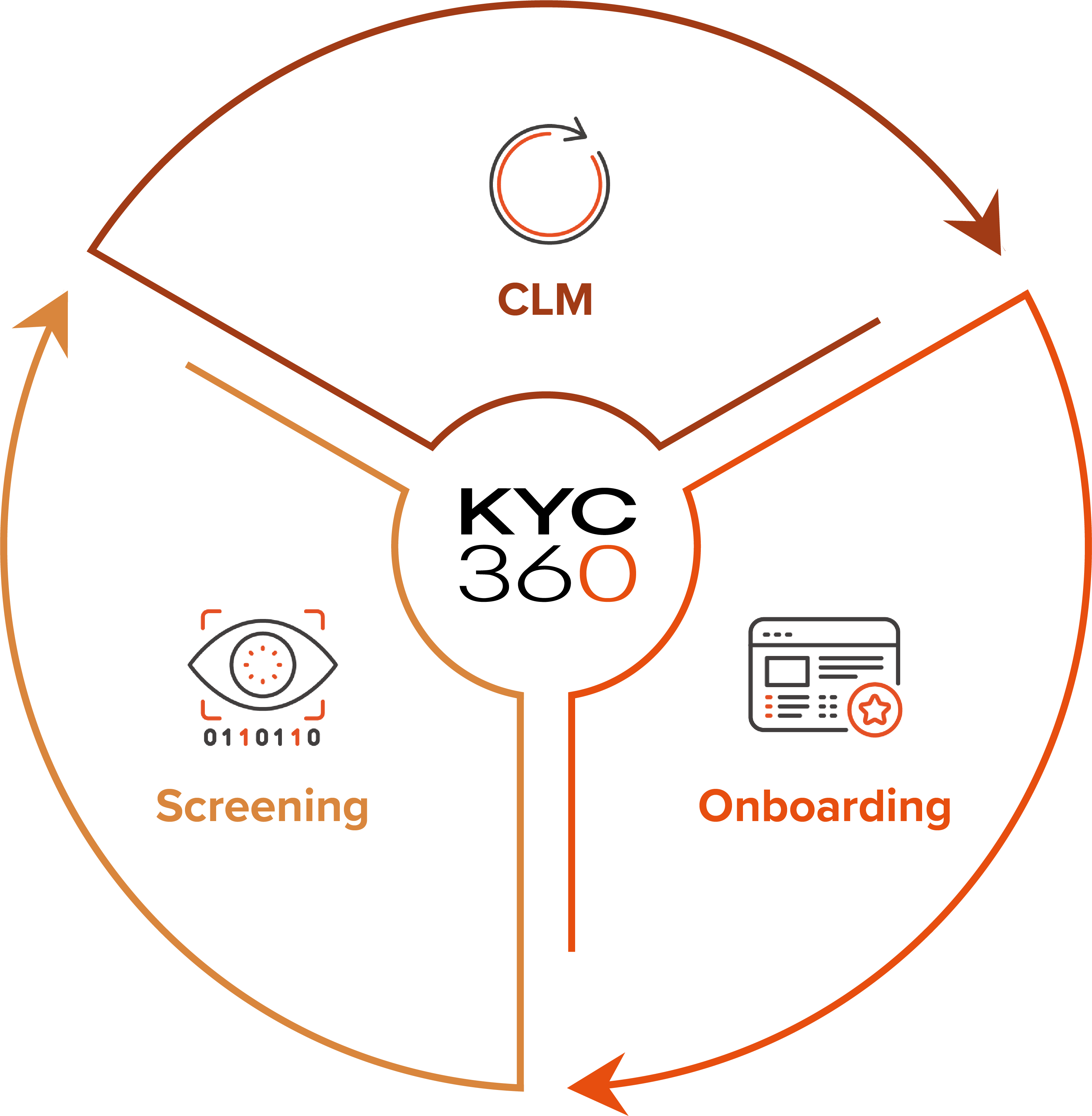
The KYC360 platform is an end-to-end solution offering slicker business processes with a streamlined, automated approach to Know Your Customer (KYC) compliance. This enables our customers to outperform commercially through operational efficiency gains whilst delivering improved customer experience and KYC data quality.
Consolidate your system stack and data vendor relationships with one platform to cover all Onboarding, Screening, Perpetual KYC (pKYC) and CLM tasks, with market-leading data sources pre-integrated under a single license agreement. Live risk scoring and automated data collection enables a shift from periodic to event-driven review, while providing a single actionable picture of real-time risk with all documents and data in one place.