The reinsurance markets in the Cayman Islands and Bermuda are a genuine success story. Capital flows to these justifications because of regulatory credibility. With market growth comes regulatory scrutiny. The question that regulators are increasingly asking is not whether AML frameworks exist, but whether they work in practice. That distinction between having a framework and demonstrating its effectiveness is at the heart of how global AML supervision is evolving.
The Regulatory Landscape
Both Cayman and Bermuda are preparing for their next FATF mutual evaluations. Bermuda’s CFATF evaluation is scheduled to begin in October 2026, while the Cayman Islands is expected to face its own 5th round evaluation in 2027. The Cayman Islands Monetary Authority (CIMA) has established a new Office for Strategic Action on Illicit Finance (OSAIF) to coordinate a 2025–2026 National Risk Assessment. CIMA is actively advising regulated entities to demonstrate the effectiveness of their documented AML/CFT policies and controls, not simply that those policies exist.
The distinction matters because FATF’s effectiveness assessments specifically examine whether institutions produce real-world outcomes: whether counterparty risk is genuinely understood, whether due diligence decisions are documented and defensible, whether suspicious activity is identified and reported. Tick-box compliance is not sufficient.
Beneficial Ownership Transparency
Complex reinsurance structures, which can involve US cedants, Cayman or Bermuda-domiciled vehicles, and PE-backed asset managers, create challenges in identifying ultimate beneficial ownership. Identifying the true UBO behind three to six jurisdictions of holding structure is not straightforward, and regulators are no longer accepting that the regulated status of a counterparty is sufficient justification for reduced due diligence.
Both jurisdictions have recently tightened their beneficial ownership regimes. Bermuda’s Beneficial Ownership Act 2025 came into force on 3 November 2025, significantly expanding the scope of entities required to maintain BO registers and introducing new verification obligations.
In Cayman, the Beneficial Ownership Transparency (Amendment) Regulations 2026 were issued on 23 January 2026, shortening the timeline to notify discrepancies from 30 days to 5 days and tightening penalties for non-compliance. Access to registers is limited to individuals or entities that can demonstrate “legitimate interest”.

Challenges for Compliance Teams
In life and annuity reinsurance, increasing regulatory focus on governance around long-term liability transfers means that ownership transparency and counterparty monitoring must hold up across relationships spanning decades. In property and casualty, the broker-driven nature of placements raises specific questions about how counterparty due diligence and sanctions monitoring are managed across intermediated structures.
Compliance teams face challenges in keeping counterparty KYC data current, especially across relationships that can span 20 to 40 years, through multiple ownership changes, sanctions designations, and regulatory events. It is no longer enough to simply conduct due diligence, but teams must be able to show that it was adequate at every point in a relationship and that changes to risk were identified and responded to.
From Periodic Reviews to Continuous Monitoring
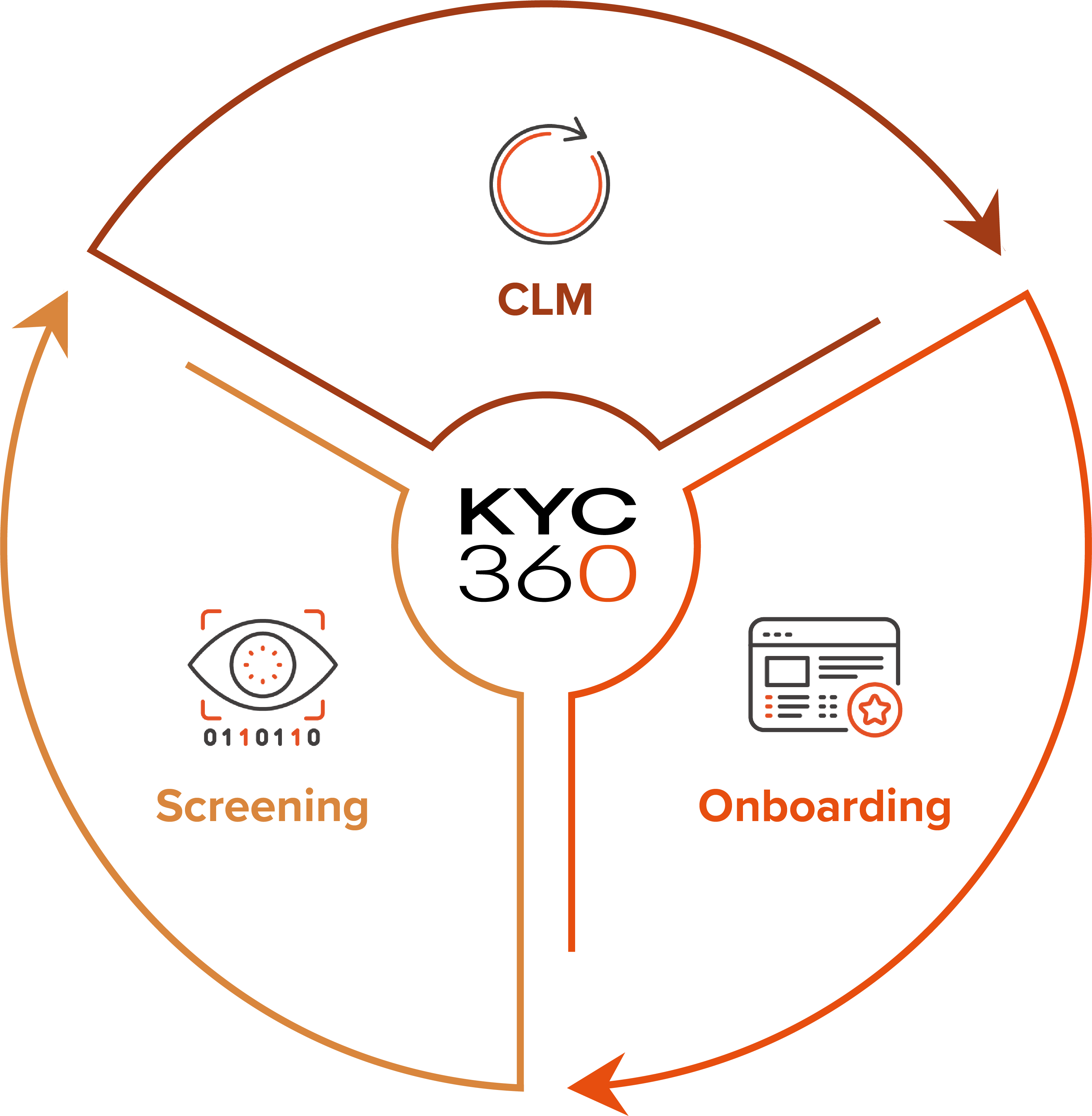
Therefore, compliance teams are moving to a perpetual KYC approach that involves continuous monitoring of risk. The KYC360 platform enables event-driven monitoring, flagging changes to beneficial ownership, sanctions exposure, adverse media, PEP status, and corporate structure in real time, across the life of a counterparty relationship. That is the standard CIMA and the BMA are moving toward. Static reviews will no longer satisfy regulators expecting real-time risk awareness. For Cayman and Bermuda-based reinsurers, demonstrating AML effectiveness is essential for maintaining a license to operate.
Integrity Is a Commercial Advantage
Strong compliance is not a cost centre. It is a market access strategy, supporting ratings confidence, counterparty trust, institutional investor comfort, and regulatory reciprocity. For jurisdictions like Cayman and Bermuda, reputation is infrastructure. AML and KYC capabilities are part of the competitive narrative. Demonstrating AML effectiveness supports ratings confidence, counterparty trust, institutional investor comfort, and regulatory reciprocity that allows the market to keep growing.
Speak to our team today and learn more about how KYC360 enables reinsurers to keep KYC data current across the entire lifecycle.

The KYC360 platform is an end-to-end solution offering slicker business processes with a streamlined, automated approach to Know Your Customer (KYC) compliance. This enables our customers to outperform commercially through operational efficiency gains whilst delivering improved customer experience and KYC data quality.